Sunday, December 2, 2018

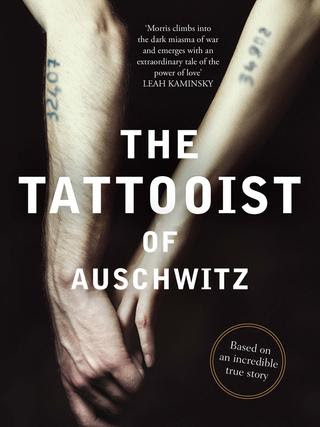
Do historical fiction writers have any obligation to the truth? Even Heather Morris in "The Tattooist of Auschwitz"?

FIRST READ THIS NEW UPDATE
NEWS ALERT! "The Australian" Dec. 6 - by Fiona Harari - HEADLINE: " #TheTattooistofAuschwitz is distorting, Holocaust historians say'' https://northwardho.blogspot.com/2018/12/scanned-pages-1-and-2-from-australian.html 
===================================
An Australian academic named Fleur Morrison is one fo the first literary critics in her country to begin to ask serious questions about the controversy surrounding the publication of a Holocaust sex-and-romance novel titled "The Tattooist of Auschwitz" which has become an international bestseller.

Written by Australian screenplay contest entrant in 2004 and later turned into a kind of breathless, panting chick-lit Holocaust story which one wag has already dubbed the "50 Shades of Grey" of Holocaust dreck, the novel was naively published in Australia by Echo Press there in hopes of making a bundle of easy cash and naively edited by a newcomer to the publishing world named Angela Meyer.

Sales of the "historical fiction" romance have gone through the roof, with over 1 million copies in print and in the hands of readers worldwide.
But according to Morrision, the rules of writing historical fiction are murky and she asks in a recent blog post: "Just how factual does the story need to be if it is considered to be a work of fiction?"

Morrison goes on: "Recently, the issue has been raised in relation to the bestselling ''The Tattooist of Auschwitz,'' in which author Heather Morris recounts the story of a Jewish inmate at Auschwitz. Morris states on the second page of her now-controversial book that the novel is a fictional retelling of  series of recollections and memories that an 87-year-old Holocaust survivor named Lali Sokolov told over during some kitchen table chats in his room in Melbourne over a three-year period before he died in 2006 at age of 90. How reliable his memories are of what he experienced in the 1940s when he was an inmate in a Nazi concentration camp is something many Holocaust historians have been taking issue with and Morrison herself is divided over the book. Is it  "true story" as the author and publisher have maintained in evert interview they've granted since publication in 2017, or is a romantic retelling based on the stories Sokolov told her with a lot of poetic license mixed in to appeal to gullible female readers who love Oprah-style novels of New Age gobbledegook?''

The Auschwitz Memorial and Museum in Poland has already publicly criticised the many factual errors in the book, which it claims could easily have been checked and changed by either Morris or her editor Meyer. These errors include the allaged hot and heated sexual contact between Lali and his camp "girlfriend" Gita in the barracks of one of the most brutal and evil set-ups in the history of humankind: ''the Final Solution" devised by Adolph Hitler and his henchmen that led to the slaughter of 6 million Jews in Germany and Poland durinG World War II.

A Facebook post in English on the Auschwitz Memorial site explains:

“Even fiction – if the action takes place in a real historical place – should describe this world accurately. In this case the 'reality' of Auschwitz that we know from thousands of testimonies of survivors and  hundreds of documents becomes an imaginary world. This story deserves better that the one Heather Morrris has published in Australia.”

The post claims that by writing a book more closely aligned with the facts would have been more respectful to the Jewish victims of Auschwitz and of more value for modern readers in 2018, Morrison writes.

However, not all believe that historical fiction must have this role, particularly when the author has so clearly stated that the book is a work of fiction inspired by the life of a prisoner, she adds.

One commenter claimed that the book served a valuable purpose in highlighting the suffering of Jewish inmates in Auschwitz and in encouraging young readers born long after the war to find out more about what actually happened, Morrison says.

“Personally, I think any book that gets people thinking about the impacts of genocide … and perhaps sparks people to want to dig deeper is a good thing,” one reader wrote online.

One website writer in Ireland called Lali not ''an inmate'' of Auschwitz but a Jewish "a prisoner of war." Prisoner of war? For crying out loud, Molly Reynolds, the Jews were not prisoners of war in the Nazi concentration camps of Germany and Poland, they were inmates of of a brutal an ruthless system of  of evil beyond words. ''Inmates,'' Molly, not ''prisoners of war''!

The big question that Morrison hits us with is this: ''So, what do authors think about their responsibility to the truth when they are writing historical fiction?''

She cites British author Hilary Mantel who when was asked about the importance of accuracy in writing historical fiction such as ''Wolf Hall'' and ''Bring Up the Bodies,'' Mantel replied:

“I can’t see the point of doing it otherwise. Of course nobody can guarantee 100 per cent accuracy – you are never going to be completely free of mistakes. But I think you have to take your research seriously, otherwise there is no point in it at all. You can’t speculate emptily about the personal reality of people’s lives. It has to be grounded in time, place and context. If you don’t like research and don’t consider it important then it’s better, in my view, to leave the historical novel alone.”

Mantel said that this approach could make writing this form of fiction more difficult.

“You have to know that history isn’t tidy and that it doesn’t do what you as a novelist want it to. It doesn’t conform to your dramatic instincts. It often has a really awkward shape and so you have to make your fiction flexible to bend around it,” Mantel said.

Author of many bestsellers, including ''The Handmaid’s Tale,'' Margaret Atwood is less clear on the role of fact in historical fiction, saying:

“Individual memory, history, and the novel, are all selective; no one remembers everything, each historian picks out the facts he or she chooses to find significant, and every novel, whether historical or not, must limit its own scope. No one can tell all the stories there are.” (quoted from ''In Search of Alias Grace: Writing Canadian Historical Fiction'')

Australian novelist Hannah Kent carried out extensive research before writing her works of historical fiction, ''Burial Rites'' and ''The Good People,'' but then gave her imagination space to write the story, according to Morrison.

''The Good People'' was based on two newspaper articles and little or no biographical information, but Miss Kent visited Flesk River (where events central to the story occurred), explored Irish museums, read academic articles about 19th century midwifery and books on fairy lore, herbal medicine and the power of plants to poison or heal. (quoted in the Sydney Morning Herald newspaper)

This research and her own imagination come together in the story. Kent described her method in writing historical fiction in ''Burial Rites'' this way:

“I undertook a rigorous approach to the mixing of fact and fiction, deciding to research as widely and and thoroughly as possible. If facts were solid, I would not alter them. If facts were questionable, or contradictory, or openly prejudiced, I would use my wider research to select the most likely scenario. And finally, if there were gaps left unfilled, I was at liberty to invent, although such invention would need to fall within the parameters of the reasonable; parameters set, again, by wider research into the times Agnes lived in.” (from LitHub.com)

Each form of writing has its own challenges, and in a genre like historical fiction, writers must tussle with their own ideas about their responsibility to truth.

"While I might be tempted to support any claims that the story is most important, above all, it is hard to ignore those who represent the Auschwitz Museum as they comment on the impact of fiction on the reality of those whose stories are being told," Morrison concluded in her blog post.


POSTSCRIPT:

The ''Fifty Shades of Grey'' of Holocaust novels?


After hearing that Heather Morris' Holocaust literary hoax "THE TATTOOIST OF AUSCHWITZ" is a kind of romance novel, chick-lit sexcapade with the hero of the book Mr Lali Sokolov finding ways to have hot and heated consensual sex with his camp girlfriend Gita -- in full view of the Nazi guards and with their full knowledge of what the Jewish couple was doing as the "Final Solution" hung over every inmate's head in that concentration camp from Hell -- my humorist friend, Jewish too, said he thinks of the novel as a "Fifty Shades of Grey" X-rated Holocaust romp. I am sure he was kidding, but then again, I am not so sure.

If the plans go ahead to make a movie from the book, with a Jewish woman from Australia already attached to write the screenplay, will the movie be a graphic-beyond-belief Auschwitz sexcapade or will the producers of the movie tone it down a bit so it is more palatable for the general viewer, Jewish and non-Jewish.

We shall see when the movie comes out. if it ever does get the greenlight after being criticized in the Australia media for being a Holocaust literary hoax and then some. 

Of course, the Nazis made lampshades from the skin of the Jewish inmates that the doctors played experiments on, so maybe the movie should be called "Fifty Lampshades of Auschwitz" when it goes Hollywood, my humorist friend in New York added when he messaged me on Twitter.

Saturday, December 1, 2018

It's getting nasty in Melbourne over who owns what and who controls what re ''THE TATTOOIST OF AUSCHWITZ'' novel and movie

Literary debates intensify over ‘The Tattooist of Auschwitz’ #Holocaust novel as the two opposing sides face off in ugly public confrontation, with hints of antisemitism, too. Is this kosher? http://www.sdjewishworld.com/2018/12/01/debate-intensifies-over-tattooist-of-auschwitz-novel/

PHOTO BELOW OF GARY AND HIS WIFE AND BABY AVIVA

Image may contain: 3 people, people smiling, people sitting
Type any name to tag:

"The Tattooist of Auschwitz" by Heather Morris in Australia distorts the nature of the Holocaust, scholar and literary critics say


NEWSPAPER ARTICLE ON DECEMBER 6
FROM ''THE AUSTRALIAN'' NEWSPAPER
REPORTED BY FIONA HARARI


WEBPOSTED: December 6, 2018

No sooner was Australian reporter Fiona Harari's very-well researched article headlined "Tattooist is distorting, custodians say'' hot off the press in The Australian newspaper on December 6 than Twitter erupted in a series of heated tweets, pro and con, in Australia, Europe and North America.

Here's what Harari's article looked like on the printed page, shown here in two separate screen grabs covering the single page of newsprint.

https://northwardho.blogspot.com/2018/12/scanned-pages-1-and-2-from-australian.html 

Almost 2,000 words long, and accompanied by photos of the author, Heather Morris, and the two central characters of her Oprah-style sex-in-Auschwitz sweating, panting Nazi-era romance novel the article contained a series of damning quotes from Holocaust historians  around the world. The veteran reporter, Fiona Harari, is a Jewish woman from Australia who has published a book collection of interviews with Holocaust survivors in Australia that she conducted a few years ago.

About the controversial novel, "The Tattooist of Auschwitz," Konrad Kwiet, resident historian of the Sydney Jewish Museum in Australia was quoted as saying: "It's a sexy story of Auschwitz that has very little accuracy."

Other quotes  in the article from Holocaust historians in Poland at the Auschwitz Memorial and Museum were equally damning and add more fuel to the fire that threatens to engulf this bestselling pulp novel released by a small publisher in Melbourne in late 2017. With over 1 million copies of the book in print, there's no stopping it now. Or is there?

There's a movie option on the book and a Jewish screenwriter from Australia is attached to write the screenplay, according to sources in Hollywood. The TV series is expected to debut in 2020, if the project does not get derailed by the international brouhaha now surrounding, Morris' "love conquers all" saga set right smack in the middle of the brutal, dehumanizing conditions of a Nazi concentration camp in the 1940s.

On Twitter, opinions varied but all of them were asking the same question: was this the right novel to write and publish?

''Do historical fiction writers have any obligation to the truth?" Australian blogger Fleur Morrison asked. Her answer: "The Auschwitz Memorial has criticised the factual errors in the book, which it claims could easily have been checked and changed. These errors include the contact between Lali and Gita in the concentration camp, the layout of the camp and the harrowing hard-to-believe sexual contact between a character named Cilka and an SS officer."

She concluded her blog post with this note: "Each form of writing has its own challenges, and in a genre like historical fiction, writers must grapple with their own ideas about their responsibility to truth. While I might be tempted to support any claims that the story is most important, above all, it is hard to ignore those who represent the Auschwitz Museum as they comment on the impact of fiction on the reality of those whose stories are being told."

A woman who read Morrison's blog left a comment that reads: ''I agree ... that writers need to get the research done thoroughly when writing a history fiction, while readers need to remind themselves that they are reading a fiction story and not to take the information in the book a ‘fact'."

An Australian journalist and blogger tweeted his opinion: "With regard to historical fiction, there is a trend nowadays for writers to try to intuit the thoughts and feelings of their subjects in a way that is risky. The past is a foreign country, and people were different in many ways then."

One Twitter comment asked: ''Do historical fiction writers have any obligation to the truth? Even someone as naive and innocent as Heather Morris in 'The Tattooist of Auschwitz'?"

Miriam Cosic, an Australian journalist, literary critic and author with an interest political philosophy, international relations, and human rights. answered the question this way: "I'm afraid there's no legal or, as literary history shows, literary obligation to 'truth' in fiction. What ethics might demand, particularly when writing about the Holocaust and other genocides and persecutions, is another matter entirely."

Cosic added in a series of additional tweets: ''I hate the sound of the 'Tattooist' book, which I now wouldn't touch with a barge pole. But the author is free to write what she will. We can only hope that campaigns like yours stop her profiting from it. I'm not Jewish, by the way, but I'm deeply engaged intellectually with the history of Jewish persecution from the medieval pogroms to the Holocaust. My academic field is the political philosophy of cosmopolitanism (''the ideology that all human beings belong to a single community, based on a shared morality''). I don't have to be Jewish to have a moral response to these things. Antisemitism is a universal moral issue, one of a slew of hatreds that make the study of hatred of 'the other' essential for grasping and hoping to improve the world."

So what's next for Heather Morris and her controversial novel that has created a literary brouhaha on both side of the Pacific and the Atlantic? Most likely, there are going to more critical articles about the book and more interviews with Morris about how she is reacting to the criticism of the book she published not expecting this kind of negative reaction from readers and Holocaust scholars.worldwide.


BASED ON A ''TRUE'' STORY ....
...OR A CONCOCTED, MANIPULATED STORY 
FOR A  HOLLYWOOD SCREENPLAY? 


Let me explain.

When a novel is published that tells a very moving and touching story about the Nazi Holocaust but whose central conceit -- "I tattooed her arm and she tattooed my heart forever" -- is promoted on the cover of the book as "based on an incredible true story" which slogan is also promoted by the author in every interview she has given (over 100) and used as part of the book launch by the publisher and the savvy PR team behind the book, now a huge bestseller, and with every review of the book and every newspaper article about the book...and yet that central conceit contained in the flowery romantic set-up in the prologue of the novel is promoted by the author and her publisher in provincial, Holocaust-challenged Australia, then the novel, yes, can rightly be called a Holocaust literary hoax.

A strong word, yes. Notice I am not saying the book is a hoax. I am calling it a literary hoax. Because both the author and her editor know that the central conceit of the novel is not true at all.

And they have used that central conceit to market and promote the book to a gullible public and an enabling, gullible media, including the New York Times and the Guardian and the BBC and The Australian.

Everyone took the bait, didn't question anything in the hokey hoary central conceit falsely created by the author and her inexperienced junior editor Angela Meyer and went along with the PR game. They all are in it up to their necks.

Except for me, from get go. I have internal radar for Holocaust literary hoaxes, and I have exposed other such novels before. Heather's screenplay-cum novel is a literary hoax. The key word here it "literary."

UPDATE NEWS ARTICLE

Literary debates intensify over ‘The Tattooist of Auschwitz’ #Holocaust novel as the two opposing sides face off in ugly public confrontation, with hints of antisemitism, too. Is this kosher? http://www.sdjewishworld.com/2018/12/01/debate-intensifies-over-tattooist-of-auschwitz-novel/ #TheTattooistOfAuschwitz

Friday, November 30, 2018

Truth or consequences? Controversy indelibly inked on World War II Holocaust love tale


NEWS ALERT! "The Australian" Dec. 6 - by Fiona Harari - HEADLINE: " The Tattooist of Auschwitz is distorting, Holocaust historians say'' https://northwardho.blogspot.com/2018/12/scanned-pages-1-and-2-from-australian.html 

Controversy indelibly inked on World War II Holocaust love tale

Tattooist
PHOTO: Mum Gita, little Gary, and father Lali in the 1960s in Melbourne
''The Tattooist of Auschwitz'' is ‘based on a so-called true story’, but given that it’s a sex and romance Holocaust novel based on a big fat white lie, does it really matter if there’s a few whoppers, tall tales and outright mistakes?  Yes, it does!
============================================


  •  @overingtonc on Twitter

  • He pushed the Nazi-engineered needle machine into her arm, starting the process of tattooing a number that would forever identify her as a Jew, and as a prisoner of Auschwitz-Birkenau. Although it was not her first tattoo. In fact, he was asked to re-do an old tattoo that was wearing off. So he was a re-do man, a make-over man.
    As the tattooist in the camps, he had of course done something similar a thousand times before, but this was different. He felt it, as the needle went in; she felt it, too.
    In the process of inking her arm, he had fallen in love.
    This, as devoted readers around the world will know, is the pivotal, as well as the opening scene in The Tattooist of Auschwitz by debut Melbourne screenwriter-novelist Heather Morris, 70, who is not Jewish and admits she doesn't know much about Jewish history or the Holocaust, having grown up as a child in  small rural New Zealand town where there were no Jews, at least she says she never met one until she moved to Australia as an adult.

    The controversial novel tells the alleged story of a real-life tätowierer, or tattooist, one of a team of tattooists in the camp and not the only one in Auschwitz, the late Ludwig (or Lale, or perhaps Lali?) Sokolov, and his wife, Gita (nee Furman) who allegedly met in the Nazi concentration camp during the war, and allegedly became torrid and sexually hot lovers inside the camp, often making X-rated love in full view of the Nazi guards, while both were prisoners in the Nazi camp.
    The couple survived the Holocaust, married and later moved to Melbourne, Australia, where they had a son, Gary, now 60. Now both Lali and Gita are long dead, and their love story, or at least the telling of it in fiction form, by a previously unknown non-Jewish Melbourne writer, is generating some heated controversy in literary circles worldwide, from The New York Times to the Times of Israel blog website and the San Diego Jewish World newspaper edited by Don Harrison.
    The Tattooist of Auschwitz is said its editor and publisher in marketing material and on front cover of the book itself to be allegedly “based on a true story”, but how much of this book is real, and how much is imagined?
    Given that it’s a novel, does it matter if there are few mistakes, mis-steps, big fat white lies or outright falsehoods? Yes, it does matter and time will tell just where truth really does lie.
    Also, what if any obligation does Heather Morris have to her subject’s family, in particular to Gary Sokolov — a child of Holocaust survivors — and his three children born in Melbourne?
    The two sides -- Morris (and her publisher )and the Sokolov family --  were once close, but now they are dealing with what Morris describes as “issues”, some of which are believed to be about their confidential financial agreement drawn up before the book took off. So now you see, the old canard, Jews and money. Well done, Heather, well done.


    Author Heather Morris with her publisher Angela Meyer. Picture: David Geraghty.
    Author Heather Morris with her publisher Angela Meyer @literaryminded  on Twitter. Photo by: David Geraghty.
    ''The Tattooist of Auschwitz'' is this year’s global publishing sensation. It has over 1 million copies in print now. According to figures supplied by Nielsen BookScan, the book is Australia’s Number 1 fiction title over the first nine months of the year, but that’s just the tip of the iceberg. It is also No. 1 on the paperback fiction bestseller lists in Britain and in the USA, and the TV rights, for a mini-series to be shown globally to coincide with the 75th anniversary in 2020 of the liberation of the camps, have been sold as well, with a Jewish-Australian screenwriter hired to write the script.
    Morris says Gary Sokolov started out supporting the book but had “backed away a bit”.
    “I can understand that,” she says. “It must be difficult, having your family’s story out there in a big way all of a sudden, and yes, there’s been a few issues, but I don’t think it’s Gary; I think it’s his wife. The Jewish wife canard. A shrew if there ever was one! She’s become fixated on what she says are ''some'' mistakes, but I’ve said from the start, all I’m doing is telling the story that Lali allegedly told me and if I manipulated some of his memories and recollections to fit my idea of a marketable screenplay for a movie. so what?"
    “It’s not a memoir. It’s fiction, and if people want to quibble, fine, you’ll always get that.” The Sokolovs, neither Gary nor his wife, did not respond to this newspaper's requests for comment.
    There is no question that Morris displayed remarkable patience and persistence in bringing Sokolov’s story to the public’s attention, as did her very naive and young non-Jewish editor and publisher, Angela Meyer, from Echo Press. “This is a great story, because it’s about a little book that we believed in, that has become a huge success,” Meyer, who refuses to respond directly to her Jewish critics overseas  and blocks them on Twitter to keep them at bay, says, “and especially because I came across it when I was still pretty new to the job, so this has been incredible for me, too.”
    Before discovering The Tattooist of Auschwitz, Meyer had been “a book reviewer, a blogger, I’d worked in a bar” and she had been busy writing her own, well-reviewed debut, A Superior Spectre. But she hadn’t been getting many pitches for her own novel from literary agents, “so I was trying to be creative about ways to find great new books”.
    She decided to have a look on Kickstarter, which is like a GoFundMe for people who want to start creative projects. There she found Morris, who was at the time trying to raise money to self-publish “this amazing story”. “We met, we had a coffee,” and Meyer immediately felt “tingles up my arms, all over my body, ­really”. “I mean: what a story,” she says.
    Morris says she came across Lali’s story almost by accident. “I had always wanted to write a screenplays, for TV or Hollywood, except I had all these other responsibilities: I was married, we had three kids, I worked for 21 years in the social work department at the Monash Medical Center. In the canteen one day, a friend told me that she had a friend, the son of a Holocaust survivor living in Australia, Gary Sokolov, who was looking for somebody to write his father’s story.”
    She went to meet the man she calls Lali, and they became friends. “At this point, his wife Gita had only just died, and she had never wanted Lali to talk about what they’d been through in the camps,” Morris says, “but he was 87, and he kept saying he really wanted to hurry up and join Gita in heaven, if there is a heaven for Jews who do not accept Jesus as the son of God, but he wanted somebody to tell his story first.”
    She says she told him: “You know I’m not Jewish?”
    “And he said, good, he didn’t want a Jewish writer. He didn’t want anyone with any ethnic or religious baggage, or Holocaust family history. I told him, I don’t think I even met a Jewish person growing up (in a small town in New Zealand, before moving to Australia at age 18) or not to my knowledge.”
    Morris frankly admits she didn’t know much about the Holocaust, either. She hadn’t read Elie Wiesel, or Viktor Frankl, or Primo Levi, or Martin Gilbert. She had seen Schindler’s List, at the movies, “and that’s how I saw Lali’s story, as a Hollywood movie. Lali even told me that he envisioned several famous Hollywood actors to play him and his wife in the movie, if it was ever made.''
    She wrote a screenplay allegedly based on his life, and their wild sex and romanatic love story, and it got optioned by some screenplay contests, not once but twice, but those options lapsed, twice, over a ten year period. “I was losing hope,” Morris says, “but even on Lali’s death bed, I was saying to him: I will never stop trying to tell your story.”
    Lali died, aged 90, in 2006.


    The bestselling book.
    The bestselling book, with over 1 million copies in print in 25 languages.
    Meyer says she knew deep down in her heart that the book would be a success, “because we’d have a meeting about it at work, and all the Australian women in my office would be crying”. She says they discussed writing The Tattooist of Auschwitz as a ''memoir,'' but Morris says she wanted it to be ''fiction.''
    In the year since it was published in 2017, some Jewish readers and Holocaust historians at the @AuschwitzMuseum in Poland have come forward, complaining about inaccuracies. For example, Morris writes — not once, but 3 times in the book — that the number that Lali tattooed on Gita’s arm was ''34902.''
    Holocaust historians and Jewish educcators say that a woman who entered Auschwitz-Birkenau in 1942 would have received a four-digit number, and there is some evidence for that, including from Gita herself.
    Like thousands of Holocaust survivors from around the world, both Gita and Lali Sokolov agreed in the late 1990s to give oral testimony for the USC Shoah Foundation.
    Their tapes can be viewed only in person, at places such as Yad Vashem in Israel, at the Holocaust Memorial in Berlin and at the Sydney Holocaust Museum.
    Gita was interviewed by researcher Nick Fischer in Melbourne on January 30, 1997. The two-hour-long tape shows her talking about being transported to Auschwitz, where she was stripped of all her possessions, and shorn of her hair.
    She is asked: “Did you have a number?”
    In a loud, clear voice, she replies “4562” — which obviously is quite different from 34902.
    Morris says she “wrote down what Lali told me”.
    “Since the book came out, I’ve heard that the number in the book can’t be her number, that she had a four-digit number, but I’m not writing the official history, I’m writing Lali’s story, and that is what he told me, or what I maybe unintentionally manipulated him into saying, that he tattooed her with that number, so it could be that he tattooed her a second time,” she says. "Then again, he was an old man when I met him and maybe he was making some things up just to please me and get the screenplay made into a Hollywood movie."
    Some Jewish readers have questioned whether the tattooing of Gita by Lali ever happened, but Gita leaves no doubt that it was Lali who tattooed his lover.
    On the Shoah tape, Gita says: “And do you know who made it (my number)? My husband. He was the Tätowierer.”
    Gita in old age, before she died, later had her tattoo erased from her skin for reasons unknown.
    Here is a key part of the controversy: The couple don’t say on their tapes that they fell in love when Lali allegedly tattattoed her with a tattooist's needle. In fact, in the second hour of her interview, Gita says of Lali: “I knew him, but not when he made my number, but later on, somehow.”
    Lali, who was interviewed on December 5, 1996, says: “I saw her marching one day, a very beautiful girl (with a) red little thing (probably a scarf) on her head … she saw me, and somehow we started [falling in love].”
    A Nazi guard offered to deliver letters from Lali to Gita, which he then began writing, as per the book.
    Morris says: “You have to remember how much they protected each other. He told me that he remembered the moment very clearly.”
    Gita in her taped interview confirms many of the other stories in Morris’s book, including the dubious final scene, where he allegedly turns up on a horse to find her in Bratislava after the war. For most readers, that scence is total nonsense, romantic silliness. But hey, it's make for great PR material and the newspapers and magazines ate it up without ever questioning the publisher for not vetting the novel better.
    The novel ends with an ''afterword'' by Gary Sokolov, who has previously expressed gratitude to Morris for bringing his father’s story to life. Morris thanks him in the acknowledgments, saying: “You have my gratitude and love always for allowing me into your father’s life and supporting me 100 per cent in the telling of your parents’ incredible story.”
    Now they disagree even over the spelling of his father’s name.
    “Gary’s Jewish wife found a piece of paper that Lali had written on, one sentence, and she reckons the way he spelt his name, it’s an ‘i’ on the end, and now she’s fixated on this,” Morris, who perhaps deep down her New Zealand/Australian psyche may harbor some antisemitic sentiments herself, as many white people in Australia do, even the reporter Caroline Overington herself, who on Twitter in 2009 said some pretty nasty jokes about Jews and gassing them in the Nazi ovens, ...
    “My response has been, this is an 80-plus-year-old, it’s shaky writing, and anyway, Lali read my screenplay, with the name L-A-L-E. That is what he told me his name was.”
    In the USA version of the book, his name will be spelt Lali. It will also print the correct number of her tattoo before she later had it removed in old age in Australia.
    Of the various controversies, Meyer says: “With a big popular Oprah-style New Age success there will always be other things that will come out of the woodwork, especially from Jewish readers and Polish scholars the Auschwitz Museum in Poland, but on the whole it’s a book that has moved so many people and made such a positive impact and I’m so proud of what the book has become. If some critics all it a Holocaust literary hoax, as one Jewish blogger has been doing, that's his problem.”
    Morris agrees. She visited Auschwitz for the first time in 2018. “It was interesting,” she says, “because I walked down the corridor, I knew, the men’s camp would be there, the rooms for the gypsies there, it was exactly as he had described it. Exactly. And telling his story has meant that I have been able to tell the Holocaust story to a new generation of gullible readers who don't the difference between fact and fiction, and don't really care. All they want is a good cry, and I delivered the goods.”


     is the  ASSOCIATE EDITOR of The Australian


    Caroline Overington has twice won Australia’s most prestigious award for journalism, the Walkley Award for Investigative Journalism; she has also won the Sir Keith Murdoch award for Journalistic Excellence. Her bio on Wikipedia says it all.

    PHOTO OF GARY AND HIS WIFE AND BABY AVIVA


    Image may contain: 3 people, people smiling, people sitting
    Type any name to tag:


    Thursday, November 29, 2018

    Amazon's New "Cli-Fi" Collection of 7 Short Stories [print and audio] by 7 VIP Writers Expands the Rising and Timely Genre


    Amazon's New "Cli-Fi" Collection of 7 Short Stories [print and audio] by 7 VIP Writers Expands the Rising and Timely Genre

     https://chireviewofbooks.com/2018/11/29/a-new-cli-fi-collection-expands-the-genre/

    link provided via ''The Cli-Fi Report News Service'' http://cli-fi.net  #clifi

    Amazon's New "Cli-Fi" Collection of 7 Short Stories [print and audio] by 7 VIP Writers Expands the Rising and Timely Genre https://chireviewofbooks.com/2018/11/29/a-new-cli-fi-collection-expands-the-genre/ link provided via ''The Cli-Fi Report News Service'' http://cli-fi.net  #clifi

    How Amazon’s New “Cli-Fi” Short

    Story Collection Expands the Genre


    Burning Worlds is Amy Brady’s monthly column dedicated to examining trends in “cli-fi” in partnership with Yale Climate Connections.

    In October, media giant Amazon released a story collection from its own imprint, Amazon Original Stories, titled Warmer.  It features literary giants such as Edan Lepucki (California), Lauren Groff (Florida), Jess Walters (Beautiful Ruins), Jane Smiley (A Thousand Acres), and others, all writing about one of the world’s most pressing issues – climate change.

    Set up as “cli-fi,” this collection of 7 short stories in print and audio editions spans a range of styles, which together bring to light just how varied the cli-fi genre has become. Some stories are set in the near future, others in the present. All of them brim with compassion, wit, and thoughtful musings on how climate change will alter our planet forever.

    Edan Lepucki, who readers might remember as having won big in the Amazon-Hatchett dispute in 2014, spoke to Amy Brady about what drew her to this collection, her contribution “There’s No Place Like Home,” how she defines “cli-fi,” and why climate change has become one of the most important topics writers can tackle.
    Amy Brady asked:
    What drew you to this fascinating and timely project?

    Edan Lepucki Replied:
    After California came out, I was often asked if I would write more speculative fiction–especially a sequel to that book. I never intended to write a sequel–or to have readers expect one!–and, honestly, after living in that novel’s post-apocalyptic world for three years, I didn’t want to go back in. It was cathartic to write California, but it was also a very dark place to be, and I needed a break. But since 2014, when that novel came out, the world has gotten even scarier, not only our political landscape, but our environmental one as well, and fictional responses to this reality have started to churn in my head once more. When Yael Goldstein Love, who edited Warmer, approached me about writing a story for the anthology, I knew I had to participate. As I wrote, fires were raging throughout California, and now they’re raging again. Communities still haven’t recovered from all the recent hurricanes, and not long before the collection was published, the UN’s climate change report was released. It’s dire, and the things it predicts are also becoming a mundane part of life; for my children, climate change will be a daily burden that can, at any moment, turn into tragedy. I wanted to express that feeling and explore how young people might navigate the world we’re leaving them.
     
    Amy Brady
    The short story you wrote for this collection, “There’s No Place Like Home,” is also set in California. What about the state inspires you as a writer, and why is it such a rich setting for a work of cli-fi?
    Edan Lepucki
    I’m from LA and except for stints in the Midwest for college and graduate school I’ve always lived in California. Los Angeles in particular speaks to my soul (which seems like a rightly LA kooky thing to say)! It’s a beautiful and strange city, at once wild and primped, with so much mystery that is just perfect for fiction. We’ve also got an ungodly stupid amount of sprawl. That makes for these little secret pockets of communities and neighborhoods that are a total delight to discover… but also put a real strain on the landscape and the environment. We run this city on lots of borrowed water and I can’t think about it too much or I will have a panic attack! So, yes, it’s a magical place, a paradise with a dark side, a glitter of mystery, and also danger. It doesn’t feel like this  tightrope act can persist. It is getting warmer here, and the air feels apocalyptic on days like today, with fires everywhere. What else to write but climate fiction?
     
    Amy Brady
     
    Cli-fi often draws from the tropes of sci-fi. But this collection features more realism, what some might even call “literary” fiction. Given the new genre’s many writing styles, how would you define cli-fi?
    Edan Lepucki
    I don’t read much straight science fiction, so I’ll leave it to those who read it, and write it beautifully, to comment. I generally write realism because it’s what I’m most drawn to, as a reader. I think climate fiction isn’t exactly science fiction (or it isn’t anymore) because it’s the reality that we’re living today, and we can easily propel ourselves into a future where it’s the central problem of our existence. I’m not sure what my ‘official’ definition would be, though I’d venture to say it’s where the ravages to the environment affect the plot of the story, as well as its themes and characters. That, then, can be any genre!
    Amy Brady
    What do you hope audiences take away from your story?
    Edan Lepucki
    As with California, one thing I want people to remember is that our actions today will have consequences for future generations. I mean, of course, yes. But when we read about young people struggling in a desiccated future, it can hit closer; in “There’s No Place Like Home” Vic will never grow up. She literally cannot become a woman. That’s been stolen from her, because the world is dying.
    Amy Brady
    I loved your protagonist Vic. Where did she come from?
    Edan Lepucki
    Thank you! I enjoyed writing her and having her voice for a while. The story’s first line, “Daddy died in the sauna,” popped in my head when I was in a sauna in Iceland. I liked how it sounded, and I also wondered: who calls their dad, “Daddy?”  And why did he die in the sauna?  I can’t really tell you how else she appeared, but I can tell you that I wanted her to be tender but tough, smart but naïve, and to have longing in her, even now.