Tuesday, April 3, 2018

Climate Fiction Book Club: Memories of Water by Emmi Itäranta FOLLOW US CLIMATE FICTION BOOK CLUB: MEMORIES OF WATER BY EMMI ITÄRANTA Climate change, environmental problems, justice, food security, human relations to nature, water scarcity, political differences, and power relations. These are just a few examples of concepts that we, as researchers within environmental studies, face in our everyday working life. We write articles and read articles, we write books and read books, we present our work at conferences and listen to other researchers’ works at conferences. This is, of course, stimulating and exciting, but it is also only a few ways among others to deal with and talk about climate, or environment-related questions. In the search for other forums to talk about these questions, a few colleagues of ours came up with a great idea: a climate fiction book club! A few days ago, we had the first meeting of this year and it was a blast! Since the two of us took over the responsibility to organize the cli-fi book club, the list of potential books has grown longer and longer. Books within the genre of cli-fi can, very briefly, be described to be fiction that deals with the impacts of climate change and global warming. That the genre is becoming increasingly popular can easily be confirmed by the great number of available cli-fi books. Previously in the cli-fi book club, we have read two books. The first book was The Carhullan Army, a book about women creating an alternative life on a self-supporting farm as an escape from an oppressive, patriarchal regime. The second book was Cities of Salt, by Abdul Rahman Munif. It concerned the discovery of oil reserves on the Arabian Peninsula sometime in the 1930s and was written from the perspective of the local inhabitants. This time, we have read Memory of Water, written by Emmi Itäranta. In the book, we got to know Noria, a girl living in a small village somewhere near where Finland is located today. She lives with her father, who is a tea master, and her mother, who is a researcher. The military regime is constantly controlling their lives and Noria’s parents have different opinions about her future in the village. When she reaches a certain age, she gets to choose if she wants to stay in the village and become a tea master, or if she wants to move with her mother to another city. She chooses the first option and starts studying her father’s tea master skills, while her mother moves and starts working as a researcher. The water supply in the village is only getting scarcer and the regime is constantly accusing the villagers of water crimes. Noria faces many difficult situations during the book and we got to follow her on her journey. A few days ago, we met at a restaurant for a prolonged lunch to discuss the book. Nine excited book readers turned up and shared their thoughts. There were no questions to answer, nor a form to follow. Instead, we wanted the discussion to be informal and light-hearted. While we enjoyed raggmunk, (a Swedish dish that resembles pancakes but is made almost entirely of potatoes), the discussions in small groups started to take shape. We discussed how we felt about reading the book, how we experienced characters and the story, and how climate or environmental change was portrayed, but we also raised other questions that had come to mind while reading. Since there could be interested book readers reading this blog post, we will not write more about the story itself or different happenings. However, what we can say is that we would like to encourage more researchers within environmental studies to create cli-fi book clubs. We concluded that it is very interesting and valuable for us to see how questions that we deal with every day are described and narrated in fictional contexts. We would also like to encourage curious readers to read Memories of Water. It is an enthusing book that deals with water, something that we all handle in our daily lives, but which may be threatened under climate change – both because of scarcity and potential resource conflicts. Emelie Fälton and Maria Jernnäs Emelie Fälton: Seed Box Ph.D. Student at The Department of Thematic Studies: Environmental Change, Linköping University Maria Jernäs: Ph.D. Student at The Department of Thematic Studies: Environmental Change, Linköping University. Funded by Formas – A Global Potluck. Affiliated to MISTRA Geopolitics Research Programme.

Climate Fiction Book Club: Memories of Water by Emmi Itäranta

FOLLOW US  
CLIMATE FICTION BOOK CLUB: MEMORIES OF WATER BY EMMI ITÄRANTA
Climate change, environmental problems, justice, food security, human relations to nature, water scarcity, political differences, and power relations. These are just a few examples of concepts that we, as researchers within environmental studies, face in our everyday working life. We write articles and read articles, we write books and read books, we present our work at conferences and listen to other researchers’ works at conferences. This is, of course, stimulating and exciting, but it is also only a few ways among others to deal with and talk about climate, or environment-related questions. In the search for other forums to talk about these questions, a few colleagues of ours came up with a great idea: a climate fiction book club! A few days ago, we had the first meeting of this year and it was a blast!
Since the two of us took over the responsibility to organize the cli-fi book club, the list of potential books has grown longer and longer. Books within the genre of cli-fi can, very briefly, be described to be fiction that deals with the impacts of climate change and global warming. That the genre is becoming increasingly popular can easily be confirmed by the great number of available cli-fi books. Previously in the cli-fi book club, we have read two books. The first book was The Carhullan Army, a book about women creating an alternative life on a self-supporting farm as an escape from an oppressive, patriarchal regime. The second book was Cities of Salt, by Abdul Rahman Munif. It concerned the discovery of oil reserves on the Arabian Peninsula sometime in the 1930s and was written from the perspective of the local inhabitants.
This time, we have read Memory of Water, written by Emmi Itäranta. In the book, we got to know Noria, a girl living in a small village somewhere near where Finland is located today. She lives with her father, who is a tea master, and her mother, who is a researcher. The military regime is constantly controlling their lives and Noria’s parents have different opinions about her future in the village. When she reaches a certain age, she gets to choose if she wants to stay in the village and become a tea master, or if she wants to move with her mother to another city. She chooses the first option and starts studying her father’s tea master skills, while her mother moves and starts working as a researcher. The water supply in the village is only getting scarcer and the regime is constantly accusing the villagers of water crimes. Noria faces many difficult situations during the book and we got to follow her on her journey.
A few days ago, we met at a restaurant for a prolonged lunch to discuss the book. Nine excited book readers turned up and shared their thoughts. There were no questions to answer, nor a form to follow. Instead, we wanted the discussion to be informal and light-hearted. While we enjoyed raggmunk, (a Swedish dish that resembles pancakes but is made almost entirely of potatoes), the discussions in small groups started to take shape. We discussed how we felt about reading the book, how we experienced characters and the story, and how climate or environmental change was portrayed, but we also raised other questions that had come to mind while reading.
Since there could be interested book readers reading this blog post, we will not write more about the story itself or different happenings. However, what we can say is that we would like to encourage more researchers within environmental studies to create cli-fi book clubs. We concluded that it is very interesting and valuable for us to see how questions that we deal with every day are described and narrated in fictional contexts. We would also like to encourage curious readers to read Memories of Water. It is an enthusing book that deals with water, something that we all handle in our daily lives, but which may be threatened under climate change – both because of scarcity and potential resource conflicts.
Emelie Fälton and Maria Jernnäs

Emelie Fälton: Seed Box Ph.D. Student at The Department of Thematic Studies: Environmental Change, Linköping University
Maria Jernäs:  Ph.D. Student at The Department of Thematic Studies: Environmental Change, Linköping University. Funded by Formas – A Global Potluck. Affiliated to MISTRA Geopolitics Research Programme.

Is Cli-fi a New Genre? Nicola McDonagh SAYS YES!

THE Cli-Fi REPORT at WWW.cli-fi.net

Is Cli-fi a New Genre? Nicola McDonagh SAYS YES!


Hey everyone, there’s a new, exciting genre in town – Cli-fi.  Or – Climate change novels. Well, it’s not actually all that new. Authors have been writing in this genre, they just didn’t know it. Why? Because books with climate based themes have been shoved into the Dystopian or Post Apocalyptic pile. However, last year Cli-fi came into its own with Amazon giving it a separate category.


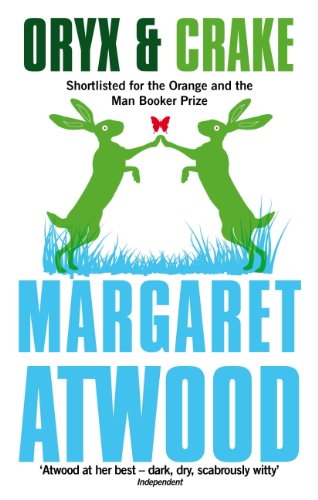
When I found out about this I thought my Song of Forgetfulness Sci-fi/Dystopian series may be in the wrong category. Apparently I’m not alone. Margaret Atwood’s  The Year of the Flood and Oryx and Crake, and Ian McEwan’s novel Solar, are clearly cli-fi, yet lumped into Sci-fi and dystopian. According to an article in The Guardian, the Cli-fi genre has been around for some time, possibly as early as 2003. You can read the full article here: 

Until I read about Cli-fi in a post by Lisa Rowan, I’d never heard of it. Stupid me!  I mean all of my books in The Song Forgetfulness series deal with climate change and the effects it has on future generations as they struggle to survive in a hostile world. As well as a host of other things too numerous to mention here. Kind of exactly the definition of this ‘new’ genre.  Well, now I know. You can read Lisa’s article here:


 Despite Cli-fi ticking all the boxes for my books, it still isn’t a popular genre that readers go to when looking for environmental disaster books. Why hasn’t it taken off? My guess is because it is pooled with so many other genres, it gets lost amongst Sci-fi/YA/dystopian etc. A lot of authors seem to be using the term quite loosely, which again dilutes the purity of the genre and potential environmental messages within the novels.

With the world buckling under the strain of plastic waste, toxic gasses and melting poplar ice-caps, perhaps now is the time to promote this category to raise awareness of global warming and the fragility of our beautiful planet. So, why not go and buy some Ci-fi books and help this newish genre to become more popular.

 If you want to have a look at my work and decide if it is indeed – Cli-fi – check out my prequel to The Song of Forgetfulness Series – The Chronicles of Mayer.


JVM endorses the usefulness of the cli-fi genre

‘Annihilation’ author Jeff VanderMeer warmly and personally endorses the rising new genre of ”cli-fi” in Q&A with Pacific Standard

​Yes, in a long interview with a prestigious American magazine, ”Annihilation” author Jeff VanderMeer has warmly and personally endorsed the rising new genre of ”cli-fi’‘ — and cli-fi novelists as well — in far-ranging Q&A with reporter John Maher at Pacific Standard magazine.​ VanderMeer, 48, sat down with Pacific Standard to discuss that future, his books, and why “anyone” — not just science fiction writers — can write cli-fi.  Do you think science fiction and speculative fiction are particularly well equipped to address present environmental issues?
JVM: I don’t think it’s a particular domain of science fiction. I think it’s something where we all have areas where we default to foundational assumptions that we should be questioning. I have my own spots like that, I’m absolutely sure, but it’s certainly not when it comes to animal behavior science and things like that.
​JVM
 is one of America’s most important and well-read novelists exploring climate change in his short stories and novels.

''Hot Genre Alert: Get to Know Climate Fiction'' by LISA ROWAN -- Lisa Rowan Lisa Rowan is a writer, editor and podcaster based in St. Petersburg, Florida.

Hot Genre Alert: Get to Know Climate Fiction

Hot Genre Alert: Get to Know Climate Fiction
What’s your favorite genre? Memoir? Science fiction? Romance?
What about cli-fi?
Oh, you’re kind, but I didn’t sneeze. I said cli-fi. Climate fiction.
The genre crept up on me before I knew it had a name. I had been eating up dystopian novels, like breakout YA series The Hunger Games and critically acclaimed Station Eleven.
Then, after moving to coastal Florida, where rising sea levels due to climate change is daily local news, a kernel of an idea popped in my mind. I told a friend the premise for a story that I couldn’t truly describe as dystopian, but didn’t fit into the supernatural mold of science fiction, either.
That’s when she told me about climate fiction, which the Chicago Review of Books defines as “a genre of literature that imagines the past, present and future effects of climate change.”
I know, it sounds grim. But this genre, which has emerged with some strength in the wake of the 2008 economic crisis, is about emotion over academics. Good climate fiction, it seems, doesn’t have to get bogged down with the science of the reality of a warming earth.
Instead, it focuses on universal feelings of loss and grief, adapting to change or the pull of science versus faith.

Cli-fi: It’s everywhere!

Margaret Atwood is a self-proclaimed cli-fi writer. Barbara Kingsolver’s latest novel, Flight Behavior, is in the genre. Ian McEwan’s got a cli-fi novel, 2010’s Solar.
Climate fiction has even snuck into my headphones, thanks to legendary actor LeVar Burton’s new podcast, Levar Burton Reads. In “What it Means When a Man Falls From the Sky” written by Lesley Nneka Arimah (and excellently told by Burton), Nneoma is a mathematician who can relieve others’ grief caused by the washing away of several continents and the worldwide turmoil that followed it.
Although we get snippets of information about the events relating to the changing climate throughout the story, Arimah provides additional context in this passage:
The girl lowered her eyes to her lap, fighting tears. As though to mock her, she was flanked by a map on the wall, the entire globe splayed out as it had been seventy years ago and as it was now. Most of what had been North America was covered in water and a sea had replaced Europe. Russia was a soaked grave. The only continents unclaimed in whole or in part by the sea were Australia and what was now the United Countries but had once been Africa. The Elimination began after a moment of relative peace, after the French had won the trust of their hosts. The Senegalese newspapers that issued warnings were dismissed as conspiracy rags, rabble-rousers inventing trouble. But then the camps, the raids, and the mysterious illness that wiped out millions. Then the cabinet members murdered in their beds. And the girl had survived it.
It all feels appropriately post-apocalyptic, but ultimately the story focuses on how Arimah’s characters react and adjust to the new world they live in with those they love. There’s not much reflection in the form of nostalgia, but rather analysis of how great change has settled on human shoulders.

Hints of cli-fi also welcome

But you don’t need an entire story packed with global-warming details to dip your toe (OK, maybe not the best metaphor?) into the cli-fi genre.
Take, for instance, the short story “Fulfillment” by Chantal Aida Gordon. Focusing on a woman finding her place in the artificial intelligence industry in a future version of our world where oversharing on social media has long been considered gauche, there’s just a whiff of cli-fi to sets the scene early on:
Some attributed the reversal to the whipping storms, rising sea levels, a hip-height rain rivers that had become a constant in the forecast. Stranded, intoxicated, drowning, their survival rooms washed away, people along the eroding coasts needed to share their locations and desperation.
And then it’s back to protagonist Celine and her relationships with her parents, her coworkers and even Glenn, her personal robot. Gordon provides just enough context to put us in Celine’s world, then moves the plot onward.
I asked Gordon to ask how she would categorize her story, since to me it falls into a captivating gray area. She suggested both sci-fi and the umbrella genre it shares with cli-fi, speculative fiction.

Ready to try a little cli-fi?

Let’s be honest: I’m a cli-fi newbie. But I’m an enthusiastic one, mulling over details to weave into my work in progress that takes place about 15 years beyond the present.
If you’re interest in trying your hand at this genre, here are a few tips, from one newbie to another:
  • Read, read, read. Soak up these wonderful novels. The Chicago Review of Books shares a few titles recommended by the man who coined the term cli-fi, if you’re looking for suggestions beyond the pieces noted above.

  • https://chireviewofbooks.com/2017/02/08/the-man-who-coined-cli-fi-has-some-reading-suggestions-for-you/

  •  Dissent Magazine also has a great primer on the genre with recommendations. Let yourself get carried away in the story, but take note of where climate-change elements are the most blatant or subtle.
  • Start with short exercises or scenes. Play with cli-fi in your Morning Pages, as a warmup exercise in your writing group or when you have an idea you haven’t fleshed out. Consider the details you include carefully and why those details would be important — or excessive — for your readers.
  • Don’t overdo it on the science. It’s counterintuitive to throw science out the window when writing about climate change, but remember that you’re not a scientist (unless you’re a scientist and a writer, in which case, you win this round). Don’t fall down a research hole about climate change but forget to develop your characters and plot. You can even write early drafts without the inclusion of specific scientific facts. Write the story first, then supplement scientific gems to support that story later. Remember, cli-fi is speculative fiction! Go ahead and speculate.
Have you noticed the cli-fi writing trend? Would you try writing some of your own, or would you rather read books from this genre?
This post contains affiliate links. That means if you purchase through our links, you’re supporting The Write Life — and we thank you for that!

Monday, April 2, 2018

Meet the acclaimed Canadian author who couldn't stop lying about his birthplace Author Bill Gaston has fibbed about being born in Flin Flon (and New Zealand, and Norway and more). How Flin Flon set out to make him an ‘honest man.’ by Aaron Hutchins Apr 2, 2018 (Photo illustration by Stephen Gregory) This isn’t fiction. It’d be too obscure to make up: who lies about being born in Flin Flon? Bill Gaston can’t remember the first time he claimed the northern Manitoba mining town as his birthplace. It was probably 30 years ago, he guesses, long before he was one of Canada’s most acclaimed authors. But back then, if anyone asked, he might have said he was born in Canada, Norway or anywhere but his actual birth country. “I didn’t want to identify as an American or be thought of as an American,” Gaston says. At the time, he was trying to establish himself in Canada’s literary circles. He grew up in Winnipeg. He became a Canadian citizen in his teens. He just wasn’t born here. And while he couldn’t change that fact, he could make up someplace else if anyone asked. So he did. READ: 6 strange and remarkable facts about Flin Flon Not even Gaston, a Giller Prize finalist and two-time nominee for the Governor General’s Literary Award for fiction, not to mention a former editor of Canada’s oldest literary journal and a professor of creative writing, could have scripted what that falsehood would bring him in 2018. This is the real-life tale of one writer, his birther lie that endured for decades, and why a real Flin Flon native has embarked on a 2,200-km quest to make Gaston an honest man. * * * Gaston was born in Tacoma, Wash., on Jan. 14, 1953. Nine months later his family moved to Canada, first Vancouver, then Toronto, then Winnipeg, where Gaston spent most of his childhood. By the late 1960s, the Vietnam War was still going strong, and Gaston’s mom started to worry about the possibility of her boys being drafted to fight for Uncle Sam on account of their citizenship: they were still Americans by birthright. “My brother was months away from getting his draft notice, and in two years I would get mine,” Gaston says. “It was such an absurd thought to be called to fight in a gross, completely unjust and ridiculous war for a country we didn’t even relate to against people we didn’t even know.” Gaston’s mother took out Canadian citizenship herself so she could do the same by proxy for her boys. “We had to go down with her, kneel and raise our hand to the Queen and all that,” Gaston says. “I became a Canadian when I was 16.” From that day on, crossing into America meant dealing with extra scrutiny from the border guards. With a Canadian passport stating a birthplace of Tacoma, they would sometimes ask: “When did you renounce your citizenship?” Gaston says. “One even asked me: ‘When did you renounce your country?’ ” Gaston would just stay silent. He left America before he could even walk. He remembers nothing of his time there. He didn’t want to be an American. He didn’t even want to say he was born there. * * * Flin Flon (Shutterstock) No one cared much about Gaston’s roots until he became an author. His first novel was published in 1990 and several more came out within a few years. As he started to build a name for himself, someone from the world of Canadian publishing asked where he was born. “So I said I was born in Flin Flon,” Gaston remembers. “It just came off the tip of my tongue.” He knew of Flin Flon because his dad talked up his visits there with buddies to fish for pickerel. Gaston also remembered it being the hometown of Bobby Clarke, captain of the Philadelphia Flyers during their “Broad Street Bullies” era in the 1970s, a decade during which Gaston played varsity hockey at the University of British Columbia. “I was a pacifist defenceman during the Philadelphia era of hockey violence,” Gaston remembers. “So Clarke felt like my nemesis.” But the main reason he said Flin Flon? “I love the name,” he says. “How do you not love that name?” Never mind that Gaston had never set foot in Flin Flon. He still hasn’t. * * * If Gaston had remained a relatively anonymous writer, this birther scandal would never have gotten much traction. But his third collection of short stories, Sex Is Red, received a glowing review from the Globe and Mail in 1998: “Bill Gaston deserves to dwell in the company of Findlay, Atwood and Munro as one of this country’s literary treasures.” The accolades came fast thereafter. His 2002 book, Mount Appetite, was nominated for the Giller Prize, one of Canada’s most prestigious literary awards. Four years later, his next collection of short stories, Gargoyles, was nominated for the Governor General’s Literary Award for fiction. As Gaston’s fame grew, his fake birthplace of Flin Flon took root in media articles, the Canadian Encyclopedia and even the Bill Gaston fonds at Simon Fraser University. FROM 1938: Boom times in Flin Flon “My spouse and friends know where I’m born. It’s not something I tried to hide. I just didn’t want to be thought of as an American—especially in Canadian literature,” Gaston says. “I just ignored it and hoped it would go away.” It didn’t. With every new book he released came more favourable reviews, such as his second nod for a Governor General’s award in 2014. Then, last year, the Winnipeg Free Press wrote an article about Gaston’s most recent book, A Mariner’s Guide to Self Sabotage. And in what had become routine for his chroniclers, Gaston was once again described as a “Flin Flon-born, Victoria-based” writer. Gaston let it slide. He’s not that famous an author, he figured, not like Margaret Atwood or Michael Ondaatje. Who would care? Shortly after, he got a call from a reporter at the aptly named Flin Flon Reminder. * * * The article was supposed to be a simple story about Gaston’s roots. “When did you leave? What did you do there? Who do you know?” Gaston remembers being asked by the reporter. “I just told him the truth.” He confessed he was born in America. He only wished he could be from Flin Flon. “It was embarrassing,” Gaston says. “I used their town.” He told the reporter the lie probably originated in a 1990s copy of Canadian Who’s Who, a publication that tracks biographical information of notable Canadians. But when Maclean’s dug up a 1996 copy of Canadian Who’s Who, it stated that Gaston was born not in Flin Flon, or Tacoma even, but in Oslo, Norway. Bill Gaston’s entry in the 1996 Canadian Who’s Who, which listed his birthplace as Oslo, Norway It was another Gaston fabrication. “I have no idea, or memory, of when I said Oslo, or if it’s anywhere else,” Gaston explained upon being told about his faux-Norwegian roots. “Clearly I didn’t want to be American.” Tracking down Gaston’s many supposed birthplaces is much like playing a real-life version of the children’s video game and TV series Where in the World Is Carmen Sandiego?—although Gaston’s tale could be more enigmatic. He was also born in New Zealand, according to a 1990 article for the Globe and Mail; in Tacoma, according to a 1994 article in the Vancouver Sun; in New Brunswick, according to a 1999 article in New Brunswick’s Telegraph-Journal; and in Vancouver, according to HockeyDB, a hockey statistics archive. (Gaston was, indeed, born in Tacoma. He provided Maclean’s with a copy of his passport to prove as much. Maclean’s also confirmed his date and place of birth with the Tacoma-Pierce County Health Department.) All the supposed birthplaces of Bill Gaston, including the real city where he was born: Tacoma, Wash. (Map by Terra Ciolfe) The Reminder ran a story on Gaston’s real birthplace and, months later, a copy of that newspaper was still lying among a pile of papers in the kitchen of Flin Flon resident Greg East. He used the papers to start his wood stove, but when the article about Gaston’s Flin Flon fabrication found its way to the top of the pile, he set it aside. Months later, the article was back atop the pile. East reread the story, and balked again at burning it. He couldn’t stop thinking about Gaston, a man he’d never heard of before—much less read any of his literature. “I thought if I’ve looked at the article that many times, I should do something about it,” East says. He wrote a letter to Flin Flon’s city council in January with an idea: make Gaston an honorary resident. “Anybody who wants to be a citizen of Flin Flon so much that they said they were born here, they should be,” East says. City council immediately jumped on board. They asked the social and recreation committee to make a proposal and, within weeks, Mayor Cal Huntley signed a certificate to present to their newest local. It reads: “Bill Gaston is hereby named honorary Citizen of the City of Flin Flon with all the rights and privileges appertaining thereto.” And the certificate of honorary citizenship will soon be hand delivered to Gaston at his home in B.C. “My wife and I are travelling to Victoria—just for something to do—in about 10 days,” East told Maclean’s in March. “Bill doesn’t know this yet. I hope he’s home, because we’re going to go present them to him.” They’ve since been in touch; Gaston is expecting East to arrive in early April. Along with the certificate, East is also bringing Gaston a pin and miniature flag of Flin Flon, and a personal letter from the mayor. “The letter makes it clear that we’d like to make an honest man out of him, but by bestowing this honorary citizenship, there come some significant responsibilities,” says Huntley. “The responsibilities are he becomes an unofficial ambassador for the city of Flin Flon, and whenever he gets the opportunity, he speaks highly and promotes us.” And he hopes that Gaston will come and visit Flin Flon one day. “If he comes here, he’ll probably be staying,” Huntley adds. “There’s at least another book here for him.” East takes a pit stop in Vancouver on his way to deliver the certificate of honorary citizenship to Gaston. (Photograph by Jimmy Jeong) * * * Gaston’s been doing a lot of research on Flin Flon since the Reminder exposed his fib, most notably on how to get there. He can’t just head there right now; he’s a professor with the University of Victoria’s writing department, so he’d have to wait until the semester is over. But Gaston figures if he gets an invite to the Winnipeg International Writers Festival this fall, he’ll add an extra flight north to check out his adopted roots for the first time in his life. The more he reads up on Flin Flon, being an author and former hockey player, the more serendipitous it all seems. For starters, Flin Flon was named after a character from the 1905 science-fiction novel The Sunless City: Josiah Flintabbatey Flonatin. A copy of the book was discovered by prospectors as they searched for mineral deposits in the area, so they named the place Flin Flon. And on the ice, Flin Flon has produced an inordinate amount of NHL talent for a city with a population of less than 6,000: most notably Clarke, but also Eric Nesterenko, who happens to have been one of Gaston’s favourite players and a poet after his professional hockey career wrapped up. Even Captain Canuck, the fictional superhero, was born in Flin Flon. After decades of lying, Gaston can’t say he was born in Manitoba, but he now—truthfully—can call Flin Flon home.

Meet the acclaimed Canadian author who couldn't stop lying about his birthplace

Author Bill Gaston has fibbed about being born in Flin Flon (and New Zealand, and Norway and more). How Flin Flon set out to make him an ‘honest man.’

by 
(Photo illustration by Stephen Gregory)
This isn’t fiction. It’d be too obscure to make up: who lies about being born in Flin Flon?
Bill Gaston can’t remember the first time he claimed the northern Manitoba mining town as his birthplace. It was probably 30 years ago, he guesses, long before he was one of Canada’s most acclaimed authors. But back then, if anyone asked, he might have said he was born in Canada, Norway or anywhere but his actual birth country.
“I didn’t want to identify as an American or be thought of as an American,” Gaston says.
At the time, he was trying to establish himself in Canada’s literary circles. He grew up in Winnipeg. He became a Canadian citizen in his teens. He just wasn’t born here. And while he couldn’t change that fact, he could make up someplace else if anyone asked. So he did.
Not even Gaston, a Giller Prize finalist and two-time nominee for the Governor General’s Literary Award for fiction, not to mention a former editor of Canada’s oldest literary journal and a professor of creative writing, could have scripted what that falsehood would bring him in 2018.
This is the real-life tale of one writer, his birther lie that endured for decades, and why a real Flin Flon native has embarked on a 2,200-km quest to make Gaston an honest man.
* * *
Gaston was born in Tacoma, Wash., on Jan. 14, 1953. Nine months later his family moved to Canada, first Vancouver, then Toronto, then Winnipeg, where Gaston spent most of his childhood. By the late 1960s, the Vietnam War was still going strong, and Gaston’s mom started to worry about the possibility of her boys being drafted to fight for Uncle Sam on account of their citizenship: they were still Americans by birthright.
“My brother was months away from getting his draft notice, and in two years I would get mine,” Gaston says. “It was such an absurd thought to be called to fight in a gross, completely unjust and ridiculous war for a country we didn’t even relate to against people we didn’t even know.”
Gaston’s mother took out Canadian citizenship herself so she could do the same by proxy for her boys. “We had to go down with her, kneel and raise our hand to the Queen and all that,” Gaston says. “I became a Canadian when I was 16.”
From that day on, crossing into America meant dealing with extra scrutiny from the border guards. With a Canadian passport stating a birthplace of Tacoma, they would sometimes ask: “When did you renounce your citizenship?” Gaston says. “One even asked me: ‘When did you renounce your country?’ ”
Gaston would just stay silent. He left America before he could even walk. He remembers nothing of his time there. He didn’t want to be an American. He didn’t even want to say he was born there.
* * *
Flin Flon (Shutterstock)
No one cared much about Gaston’s roots until he became an author. His first novel was published in 1990 and several more came out within a few years. As he started to build a name for himself, someone from the world of Canadian publishing asked where he was born.
“So I said I was born in Flin Flon,” Gaston remembers. “It just came off the tip of my tongue.”
He knew of Flin Flon because his dad talked up his visits there with buddies to fish for pickerel. Gaston also remembered it being the hometown of Bobby Clarke, captain of the Philadelphia Flyers during their “Broad Street Bullies” era in the 1970s, a decade during which Gaston played varsity hockey at the University of British Columbia. “I was a pacifist defenceman during the Philadelphia era of hockey violence,” Gaston remembers. “So Clarke felt like my nemesis.”
But the main reason he said Flin Flon? “I love the name,” he says. “How do you not love that name?”
Never mind that Gaston had never set foot in Flin Flon. He still hasn’t.
* * *
If Gaston had remained a relatively anonymous writer, this birther scandal would never have gotten much traction. But his third collection of short stories, Sex Is Red, received a glowing review from the Globe and Mail in 1998: “Bill Gaston deserves to dwell in the company of Findlay, Atwood and Munro as one of this country’s literary treasures.”
The accolades came fast thereafter. His 2002 book, Mount Appetite, was nominated for the Giller Prize, one of Canada’s most prestigious literary awards. Four years later, his next collection of short stories, Gargoyles, was nominated for the Governor General’s Literary Award for fiction.
As Gaston’s fame grew, his fake birthplace of Flin Flon took root in media articles, the Canadian Encyclopedia and even the Bill Gaston fonds at Simon Fraser University.
“My spouse and friends know where I’m born. It’s not something I tried to hide. I just didn’t want to be thought of as an American—especially in Canadian literature,” Gaston says. “I just ignored it and hoped it would go away.”
It didn’t. With every new book he released came more favourable reviews, such as his second nod for a Governor General’s award in 2014.
Then, last year, the Winnipeg Free Press wrote an article about Gaston’s most recent book, A Mariner’s Guide to Self Sabotage. And in what had become routine for his chroniclers, Gaston was once again described as a “Flin Flon-born, Victoria-based” writer. Gaston let it slide. He’s notthat famous an author, he figured, not like Margaret Atwood or Michael Ondaatje. Who would care?
Shortly after, he got a call from a reporter at the aptly named Flin Flon Reminder.
* * *
The article was supposed to be a simple story about Gaston’s roots.
“When did you leave? What did you do there? Who do you know?” Gaston remembers being asked by the reporter. “I just told him the truth.”
He confessed he was born in America. He only wished he could be from Flin Flon. “It was embarrassing,” Gaston says. “I used their town.”
He told the reporter the lie probably originated in a 1990s copy of Canadian Who’s Who, a publication that tracks biographical information of notable Canadians. But when Maclean’s dug up a 1996 copy of Canadian Who’s Who, it stated that Gaston was born not in Flin Flon, or Tacoma even, but in Oslo, Norway.
Bill Gaston’s entry in the 1996 Canadian Who’s Who, which listed his birthplace as Oslo, Norway
It was another Gaston fabrication. “I have no idea, or memory, of when I said Oslo, or if it’s anywhere else,” Gaston explained upon being told about his faux-Norwegian roots. “Clearly I didn’t want to be American.”
Tracking down Gaston’s many supposed birthplaces is much like playing a real-life version of the children’s video game and TV series Where in the World Is Carmen Sandiego?—although Gaston’s tale could be more enigmatic. He was also born in New Zealand, according to a 1990 article for the Globe and Mail; in Tacoma, according to a 1994 article in the Vancouver Sun; in New Brunswick, according to a 1999 article in New Brunswick’s Telegraph-Journal; and in Vancouver, according to HockeyDB, a hockey statistics archive.
(Gaston was, indeed, born in Tacoma. He provided Maclean’s with a copy of his passport to prove as much. Maclean’s also confirmed his date and place of birth with the Tacoma-Pierce County Health Department.)
All the supposed birthplaces of Bill Gaston, including the real city where he was born: Tacoma, Wash. (Map by Terra Ciolfe)
The Reminder ran a story on Gaston’s real birthplace and, months later, a copy of that newspaper was still lying among a pile of papers in the kitchen of Flin Flon resident Greg East. He used the papers to start his wood stove, but when the article about Gaston’s Flin Flon fabrication found its way to the top of the pile, he set it aside. Months later, the article was back atop the pile. East reread the story, and balked again at burning it.
He couldn’t stop thinking about Gaston, a man he’d never heard of before—much less read any of his literature. “I thought if I’ve looked at the article that many times, I should do something about it,” East says.
He wrote a letter to Flin Flon’s city council in January with an idea: make Gaston an honorary resident. “Anybody who wants to be a citizen of Flin Flon so much that they said they were born here, they should be,” East says.
City council immediately jumped on board. They asked the social and recreation committee to make a proposal and, within weeks, Mayor Cal Huntley signed a certificate to present to their newest local. It reads: “Bill Gaston is hereby named honorary Citizen of the City of Flin Flon with all the rights and privileges appertaining thereto.”
And the certificate of honorary citizenship will soon be hand delivered to Gaston at his home in B.C.
“My wife and I are travelling to Victoria—just for something to do—in about 10 days,” East toldMaclean’s in March. “Bill doesn’t know this yet. I hope he’s home, because we’re going to go present them to him.” They’ve since been in touch; Gaston is expecting East to arrive in early April.
Along with the certificate, East is also bringing Gaston a pin and miniature flag of Flin Flon, and a personal letter from the mayor. “The letter makes it clear that we’d like to make an honest man out of him, but by bestowing this honorary citizenship, there come some significant responsibilities,” says Huntley. “The responsibilities are he becomes an unofficial ambassador for the city of Flin Flon, and whenever he gets the opportunity, he speaks highly and promotes us.”
And he hopes that Gaston will come and visit Flin Flon one day. “If he comes here, he’ll probably be staying,” Huntley adds. “There’s at least another book here for him.”
East takes a pit stop in Vancouver on his way to deliver the certificate of honorary citizenship to Gaston. (Photograph by Jimmy Jeong)
* * *
Gaston’s been doing a lot of research on Flin Flon since the Reminder exposed his fib, most notably on how to get there. He can’t just head there right now; he’s a professor with the University of Victoria’s writing department, so he’d have to wait until the semester is over. But Gaston figures if he gets an invite to the Winnipeg International Writers Festival this fall, he’ll add an extra flight north to check out his adopted roots for the first time in his life.
The more he reads up on Flin Flon, being an author and former hockey player, the more serendipitous it all seems.
For starters, Flin Flon was named after a character from the 1905 science-fiction novel The Sunless City: Josiah Flintabbatey Flonatin. A copy of the book was discovered by prospectors as they searched for mineral deposits in the area, so they named the place Flin Flon.
And on the ice, Flin Flon has produced an inordinate amount of NHL talent for a city with a population of less than 6,000: most notably Clarke, but also Eric Nesterenko, who happens to have been one of Gaston’s favourite players and a poet after his professional hockey career wrapped up.
Even Captain Canuck, the fictional superhero, was born in Flin Flon.
After decades of lying, Gaston can’t say he was born in Manitoba, but he now—truthfully—can call Flin Flon home.

How Canadian professor Harold Atwood, 81, -- elder brother of Margaret Atwood -- got his 1947 Mark Twain book back -- 70 years later (with 4 PHOTOS!!!!) - with a little help from friends online and the power of the internet --

How Canadian professor Harold Atwood, 81, -- elder brother of Margaret Atwood -- got his 1947 Mark Twain book back -- 70 years later (with 4 PHOTOS!!!!) - with a little help from friends online and the power of the internet --

https://cli-fi-books.blogspot.tw/2018/04/how-canadian-professor-harold-atwood-81.html