Thursday, April 6, 2017

Uitaţi de science fiction! Citiţi „cli-fi” sau climate fiction! -- by Stela Nadoleanu in ROMANIA

Uitaţi de science fiction! Citiţi „cli-fi” sau climate fiction!
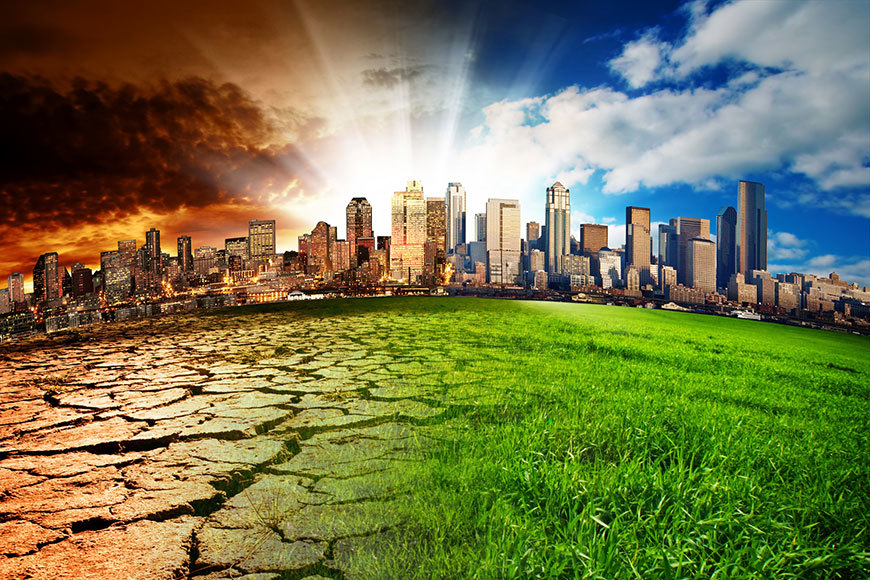
Marea Britanie este cuprinsă de ape, iar Veneţia nu mai e demult pe hartă. A mai rămas un singur urs polar în întreaga lume, iar tornadele sunt atât de frecvente încât au devenit o obişnuinţă a buletinelor meteo. Cele de mai sus pot părea (încă) exagerări ale unei minţi predispuse la scenarii dramatice. De fapt, sunt multe cărţi al căror fir epic porneşte de la realitatea dură a schimbărilor climatice şi îmbină ştiinţa, previziunile calculate ale specialiştilor din acest domeniu, cu un pic de ficţiune. Putem vorbi astăzi despre un nou gen literar. Se cheamă „climate fiction”. Pe scurt: cli-fi. Căutaţi pe Amazon după aceste cuvinte cheie. Veţi găsi nu mai puţin de 17 mii de rezultate!
Noţiunea de „climate change” este din ce în ce mai discutată astăzi (prea multă vorbărie goală, din păcate), iar scriitorii par să se fi săturat să aştepte o rezolvare. Şi-au pus imaginaţia (şi spaimele) în cuvinte, iar cititorii apreciază noul gen de ficţiune, pe cât de înfricoşător, pe atât de captivant.


Deşi am putea spune chiar şi despre unele nuvele ale lui Jules Verne că se încadrează în acest gen literar, noţiunea de „cli-fi” este una relativ nouă. Îi este atribuită jurnalistului Dan Bloom, care, după lansarea cărţii „Polar City Red” (2012), semnată de Jim Laughter, a folosit această terminologie (adaptată după celebrul sci-fi) pentru a încadra opera într-un gen literar distinct şi pentru a comenta pe marginea ei. Poate că jurnaistul nici nu şi-a imaginat la acel moment că noţiunea va căpăta asemenea amploare – nici că setea cititorilor preocupaţi de schimbările climatice va creşte pe măsură ce scenariile ficţionale par să ne ajungă (îngrijorător) din urmă.
Vă invităm să desoperiţi noul gen literar şi să citiţi unele dintre cele mai bune cărţi cli-fi scrise în ultimii ani:
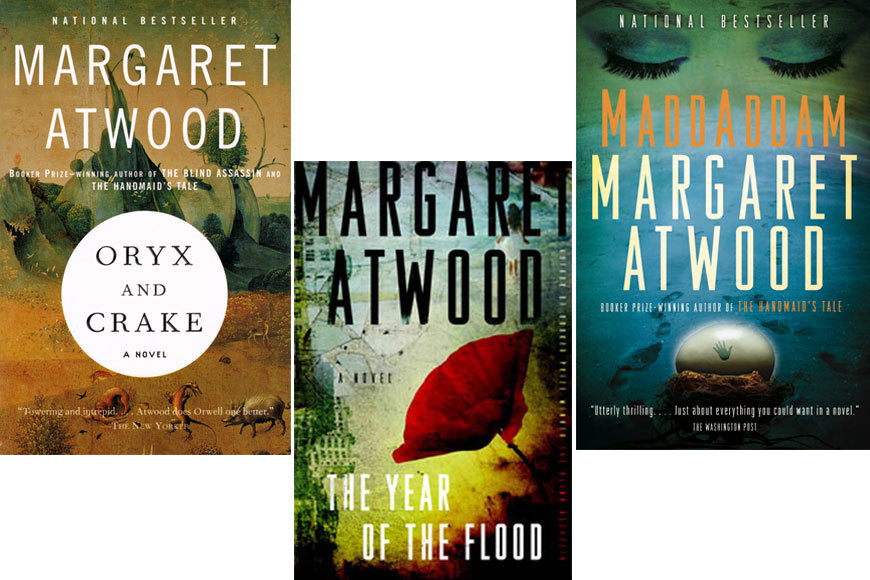
Oryx and Crake (din trilogia MaddAddam), de Margaret Atwood
Oryx and Crake (alături de The Year of the Flood şi MaddAddam), este poate una dintre cele mai bune cărţi care se includ acestui gen. Este - pe de o parte - o poveste de dragoste memorabilă, pe de alta, o poveste despre viitor cât se poate de captivantă şi convingătoare.
Snowman se chinuie să reziste într-o lume în care el poate fi chiar ultimul supravieţuitor. Jeleşte după moartea celui mai bun prieten al său (Crake) şi după misterioasa Oryx, pe care amandoi au iubit-o. Personajul se îmbarcă într-o călătorie în căutarea unor răspunsuri. Aşa vom ajunge să vedem cu ochii minţii cum arată lumea după ce marile corporaţii au schimbat cursul vieţii pe pământ prin experimente genetice ingenioase, dar puternice şi de necontrolat. Margaret Atwood are puterea să ne prezinte o lume care este pe de o parte foarte familiară nouă, pe de altă parte - greu de imaginat.

Memory of Water, de Emmi Itäranta
Autoarea finlandeză Emmi Itäranta a fost comparată cu Ursula K. Le Guin şi Margaret Atwood. Acţiunea cărţii sale se desfăşoară cândva în viitor, iar personajul principal este o tânără fată care îşi doreşte să devină un maestru în arta ceaiului. Numai că lumea este chinuită de războaie - războaie pentru apă -, o resursă mai preţioasă decât aurul. Iar izvoarele naturale curate, preţioase şi încă secrete (un secret greu de păstrat pentru o fată de 17 ani) pot fi cea mai mare avere a unei comunităţi. S-ar putea să vi se pară uşor lirică această poveste, dar scenariul unei lumi fără apă nu este atât de greu de imaginat.
Flight Behavior, de Barbara Kingsolver
Autoarea Barbara Kingsolver reuşeşte să scrie această carte fără ca subiectul grav al schimbărilor climatice să strige cititorului pe fiecare pagină. Este povestea unei familii care trăieşte undeva în valea Appalachian, iar mama descoperă milioane de fluturi-monarh care au migrat - în mod curios - aici pentru iarnă. Sătenii privesc acest lucru din perspectivă religioasă, ca pe un miracol, în timp ce oamenii de ştiinţă vin să studieze fenomenul. Cititorul descoperă că, oricât de frumoase ar fi imaginile cu milioanele de aripi de fluturi, crudul adevăr este că fluturii-monarh au fugit din Mexic din pricina schimbărilor climatice.
The Bone Clocks, de David Mitchell
Autorul (cunoscut pentru „Ghostwritten”, „Cloud Atlas” sau „Number9Dream”) a fost dintotdeauna preocupat de marea dilemă a vieţii noastre pe Pământ: de ce trebuie ca interesul şi progresul umanităţii să intre în conflict cu planeta, cu supravieţuirea tuturor speciilor? Cartea „The Bone Clocks” are 6 părţi care ne poartă prin 6 etape ale vieţii lui Holly Sykes. Ultima parte se desfăşoară în anul 2043, atunci când Holly (în vârstă de 70 de ani de-acum) apucă aceste vremuri când oamenii ajung să depindă de puţinele resurse de hrană şi supravieţuire rămase în urma schimbărilor climatice, într-o Irlandă care pierde negocierile cu China (şi implicit resursele) şi ajunge să cadă într-o stare de gravă confuzie şi violenţă. Forţa imaginilor care descriu anarhia o să vă impresioneze!

Why Cli-Fi? an Oped by Evan Shapiro in Australia, author of "Road to Nowhere"

Why Cli-Fi?

by Evan Shapiro in Australia
April 7, 2017
Oped Blog Post by Evan Shapiro in Australia, author of "Road to Nowhere"


To Cli-Fi or not to Cli-Fi, that is the question.
 
Whether ‘tis nobler in the mind to suffer the slings and arrows of outrageous science fiction or to take arms against a sea of troubles and by opposing end them?

Yes, a somewhat bastardized version of Shakespeare’s famous soliloquy. Yet if you take a moment to deconstruct it the answer to why many authors are picking up and running with the Cli-Fi mantra is apparent.

Cli-Fi was coined by journalist Dan Bloom and he champions the propagation of the term through cli-fi.net, an academic and literary Facebook group, Cli-Fi, Climate Change & Literary Criticism, and other social media channels.

It is well established that Science Fiction offers authors and readers the opportunity to enter worlds of possibility. Science Fiction has never been restricted by the word ‘Science’. On the contrary, Science Fiction explores morality, social constructs and the edges of human behavior. It is no surprise then, as we face climate change, the greatest dilemma to have challenged our species, that creative minds would act to both express their dismay but also to offer hope and possibility beyond what is considered in the media or around the watercooler.

I began my novel ‘Road to Nowhere’ in 1996 well before the term Cli-Fi. I grew up under the threat of nuclear war and when that didn’t occur I found myself still alive and worrying about the hole in the ozone layer. Remarkably that problem was resolved with collaborative global effort. Governments listened to scientists and bans were placed on fluorocarbons. They were phased out and we all moved on. The same can’t be said for carbon pollution.

The difference might be as simple as greed. There is much more money to be lost by stopping oil and coal based power in comparison to the costs involved in stopping fluorocarbons that caused the hole in the ozone. 
‘Road to Nowhere’ doesn’t sit easily within the Sci-Fi genre. It’s part thriller, conspiracy, satire, philosophical exploration and there is even a touch of romance. There is sex in there too, because for many people sex and desire are overpowering forces often never understand or controlled.

Cli-Fi brings all the competing genres within my book together and sums up what it is really all about. For me that is an exploration of the fundamental duality of our species. Our determined headlong drive into self-destruction polarized by an opposing instinct for self-preservation and survival.

By exploring climate change in fiction, authors can take fellow human beings through an experience they have not considered. And isn’t this the fundamental function of all fiction?

By coining the term Cli-Fi, Dan Bloom brings works together that exist across the world of literary fiction. The aim is simple.

We want to save the planet and we want to save our species and we want to save those we love and we want to save ourselves. It can feel powerless when observing history unfold, watching the proverbial train wreck before your eyes with no means in your power to change it.

Cli-Fi gives us that means. When all else feels powerless the ability to share ideas becomes essential. Words change minds and minds change reality.

As a writer, there are many stories I want to explore, but for the moment I can’t look away from the big glob of murky uncertainty before me. I must deconstruct it, I must make sense of what we are collectively doing. Is it too much to hope that along the way I and other authors might bring a few readers along with us?

The conceit of the writer is all I can offer. At the very least if you don’t change your mind I hope I entertain you to the end. I suddenly feel like one of the members of the quartet on the Titanic, offering a melodic knowing tone as the boat sinks into the deathly cold waters. Regardless I will continue to Cli-Fi because frankly I don’t know what else I can do.

Brian Burt's Blog: Acknowledging the Muse - Posts Tagged "cli-fi"

Brian Burt's Blog: Acknowledging the Muse - Posts Tagged "cli-fi"


 Cli-Fi or Just Sci-Fi, and Why?

by Brian Burt

 SF writers have always drawn inspiration from emerging scientific
trends and developments, especially those that spark popular
controversy. It's not surprising, then, that quite a few writers have
set recent novels in worlds turned upside down - or at least sideways
- by global warming. My own first novel, Aquarius Rising: In the Tears
of God, has climate change as its central theme, and enough books and
authors have used global warming as a story driver that media sources
like NPR proclaim a new literary genre called "climate fiction" or
"cli-fi" (see So Hot Right Now: Has Climate Change Created A New
Literary Genre?).

This has prompted many speculative fiction veterans
to sigh, roll their eyes, and point out (with muted disdain) that this
is nothing new: SF has a rich history of tackling environmental
themes, and "cli-fi" is at best a loose subcategory of classic science
fiction.

I definitely see why the SF community bristles at the implication that
this style of fiction represents something completely new. Great SF
writers have indeed explored the territory that includes climate
change, environmental disaster, and ecological imbalance for decades
and have found fertile ground there. (Fertile for the writers'
imaginations; perhaps not so fertile for the story's characters who
may be left wandering through parched and barren hellscapes.) As I
mentioned in a prior post, Frank Herbert's Dune series is a perfect
example. Kim Stanley Robinson has mined this rich story vein
brilliantly for years. And I still remember being mesmerized by Ursula
Le Guin's The Word for World is Forest.

So, for SF fans, this is nothing new. What's changed, then (besides
the melting polar ice, rising seas, violent weather patterns, and mean
Earth temperature)? I'd say two major factors contributed to the
emergence of "cli-fi" in the public eye. First, the evidence for
global warming has become dramatically visible to people in their
everyday lives. Extreme weather events and the nearly unanimous
consensus of climate scientists have gradually shifted popular
perception of this issue. Even the deniers grudgingly admit that
something is happening, although they might argue about the root
causes. Second, the theme of climate change has begun appearing in the
work of acclaimed "mainstream" literary fiction writers like Barbara
Kingsolver, Ian McEwan, and Margaret Atwood, to name a few. Although
this rankles some SF folks who feel that we're treated like
"second-class literary citizens," the reality is that mainstream
literary writers carry more weight with many media sources.

New genre or simply newly recognized SF sub-genre, this can be a
positive development for writers of speculative fiction with a passion
for environmental themes. And, for those of us who also feel
impassioned about environmental causes, it's a win-win. I believe
fiction can communicate messages (like "we're mortgaging our planet's
future for short-term economic gain") in ways that are more visceral
than nonfiction books addressing similar concerns. Facts can move the
mind, but fiction can move the spirit. Fiction writing is not
activism... but infusing core beliefs into a story can make that tale
more vivid and thought-provoking if it's not done in a preachy,
heavy-handed way.

Is it really cli-fi or just good ol' sci-fi? Ultimately, I don't care,
as long as readers enjoy the books and consider the implications.

SF
has a proud history of presenting cautionary tales about possible
dystopian futures, and I for one think that just might help humanity
avoid them!

Tuesday, April 4, 2017

Kyoto Japan new train set for delivery in 2018 with special front car lens for taking photos from the front of the train!

A book blurb for Kenneth Wick's important cli-fi novel PROGENY'S PROMISE (2017)


''PROGENY'S PROMISE'' by Kenneth Wick is an important cli-fi novel that joins a chorus of such novels echoing across the world. It's in Kindle Select and getting interest through Kindle Unlimited and it's also picking up readers on InstaFreebie and Goodreads. I've read it and recommend it highly.

In the cli-fi realm, ''Progeny's Promise'' features a unique theme. And it's a blend of sorts, that conveys an important message: that climate change can sometimes seem to be slow but at the same time can happen real fast. Wick's novel wakes us up to this fact. An alarm bell, a wake-up call, a warning flare: this book is all three wrapped up in one! Read it!

-- Dan Bloom, The Cli-Fi Report

The Elusive Disappearing Act of Wikipedia editor using easily-decoded and traced pseudonym ''Lynn'' (who could it have been? The pseudonym ID gives her true identity away and we found it.....)


A NOTE FROM Yer Old Pal CHERLOCK-SAN  in Kyoto


Bonjour, he/him/them,you, yours, us...

Uh, this is interesting but of course it has nothing to do with anything and certainly not with you; but look what turned up the other day in my detective mailbox in Japan. Some ''Sherlock Holmes'' discovered this coincidence, but surely a mere coincidence. And who cares? I like what Lynn did and  in the end she helped to improve the page and to improve its fortunes and visibility. So it all turned out AOK.

BUT look here: .......A person writing under the Kinja user-ID name of ''mlynn'' wrote this article titled " Literature and the Arts" at
http://mlynn.kinja.com/climate-change-in-literature-and-the-arts-1644566007

When you click it on now, as it has been changed by that same user, it now appears with a different USER-ID name as you will soon see, CLICK NOW.

[Could this Kinja link have any connection, even the slightest connection, with the very elusive ''Lynn'' at Wikipedia who deleted her entire ID for Lynn in December 2016 after first coming on to Wiki as ''Lynn'' with a post on May 8, 2014 attacking the inclusion of ''STATE OF FEAR'' by Michael Chreihton as she spell it,  which someone else in the community really was angry about for it being included by in a list of novels since a certain somebody was adamant at the time of May 2014 that all such novels be excluded from any list and argued so on their website.......including definitely on their own website under her own name ........in a list of novels on the old Wiki page, as it was then named...... before it was re-named under a one week ultimatum imposed by this lynn woman "professor" as Lynn as a new title page......and then this Lynn person, ''said''allegedly  to be a literature ''professor'' in Canada in the BC region and who claimed on Wiki that she came to the page after one of her "students" told her about the errors and mistakes on the original page and Lynn as hero came to the page to clean it up from its ''awful mess'' and then he/she/they  disappeared forever and covered up her tracks and has never edited any other page on Wiki again or ever before the attacks?] 

But. No way. The ''mlynn'' ID at Kinja that leads now to a clue to her real identity must be a sheer mere coincidence. Nobody would do that and then say it was not them. Lynn must really have wanted her privacy to have disappeared forever from Wiki now and tried to cover up her tracks! But the archives on Wiki cannot cover up everything and some clues now appear.

Then again Lynn said on another forum that her birthday is in October 1979. Get it? 1979! ie, "79."

And the S could stand for a maiden name such a Stevens or Soloff or Simpson, right? Or another than that begins with an S.

so put two and two together:

''mlynn'' at Kinja link (LYNN) + maiden name that begins with an ''S'' + birthday year of 1979 '' = the possible identity of the person who registered the pseufonyum of Lynn ID at Wiki on May 8, 2014 for her first post.

But Forget it. Water under the bridge. Lynn did us all a favor by cleaning up our original "awful mess" of a page and making it better now. So cheer up,  and go with the flow. Life is good. Sure, Trump is a jerk, but Wikipedia lives forever. And imposters at Wiki are a dime a dozen. Sooner or later, they all get traced and outed. But the rule is that they must ''out'' themselves, as the Wiki rules state. So ''no outing'' here. No way.


So who was/is Lynn. ????

He/she/they no longer exists. His/her/their ID has been obliterated forever from Wiki.

But ''footprints'' remain on Wiki Talk. One day, sir, the truth will out. In fact, we know her real name now. But we will never say it. She must out herself. That is the Wiki rules.

But you know what, IT DOES NOT MATTER ANYMORE! We should thank Lynn for doing what she did.  You couldn't ask for a better friend than that. Thank him/her/them someday if you can ever find him/her/them in the wild expanses of cyberspace.

Yours as ever,

CHERLOCK HOLMES-San
Tokyo


CLUE # 1

A person writing with the Kinja ID name of ''mlynn'' wrote this "Literature and the Arts" at
http://mlynn.kinja.com/climate-change-in-literature-and-the-arts-1644566007 and it now leased to another, different page of a person using a different but very interesting user ID.

Could this be the very elusive Lynn at Wikipedia who deleted her entire ID for Lynn in December 2016 after first posting at Wiki Talk on May 8, 2014 using the Lynn ID even then? OOPS! For six months from November 2014 to April 2015 she posted over 100 edits on the Wiki pages and went online almost every day to attack the page itself.

What kind of professor has the time to do all that attacking, and then to suddenly disappear and never post on Wiki again, except perhaps under a different USEr ID at wiki, since Wiki allows editors to use as many different user IDs as they wish, and none of them can be TRACED, as per Wiki rules.

Even the mods do not know who Lynn is and even if they did, they cannot every say. But in fact, they do not even know and do not want to know, as it is against WIKI rules to go into an editors registration archives and look up their REAL NAME and REAL email address. But the evidence now points to a certain someone.

But I will not out her. She must out herself. That is the RULE at Wiki, and unlike Lynn we follow the rules.

Naomi Oreskes chatting with Amitav Ghosh at a musem event in New York last fall of 2016. [AUDIO]


Here is an raw rough early audio tape of Naomi Oreskes chatting with Amitav Ghosh at a musem event in New York last fall of 2016. Thirty minutes. They were talking about novels and movies and global warming and politics and literary talk. ENJOY!
https://soundcloud.com/rubinmuseum/10052016-the-great-derangement/s-rHfrU


PS

A shorter and   ''edited'' version on this audio will go online with a link one of these days sooner or later.